Thanks for teaching this class, Dave. It's been a learning experience (even if most of what I learned reinforced the notion that I prefer to stay on stage and get told what to do). Though some of my work is perhaps ill-conceived and/or ill-executed, rest assured that it is certainly not for lack of regard. I feel as though it was difficult for me to look at scripts apart from as an actor would, rather than a dramaturg would. You may notice that some of my posts are a touch short. As for why, I simply ran out of things to say on the subject. I try not to speak just to hear myself talk (most of the time).
At any rate, enjoy your summer!
Cheers,
C. Bennett Schmidt
Thursday, June 30, 2011

Man and Superman - Dramaturg's Statement
Without a doubt, the single biggest issue faced when dealing with this particular script is the majority of act three, known as "Don Juan in Hell". Long enough to be produced as a seperate play on its own, this segment does not contribute directly to the advancement of any sort of plot. On the other hand, if this segment is left out entirely, then the audience loses almost all of the philosophical rationale behind the main character, namely the ideas of a life force and a universal consciousness. I recommend that Don Juan remain in the show, as the play is very much a piece of philosophy. To cut Don Juan would be to neuter it into a light comedy of manners with no real meat. With that being said, cutting may very well be necessary (even within the main show), as few modern audiences have the patience to sit through such a long show (upwards of four hours if performed in its entirety). There are certain segments, notably some of the longer speeches that can be trimmed down with minimal loss of content, as many of the philosophy travels in a circuituous route, and can be arrived at much more simply. As a matter of fact, some current dramaturg's ascertain that at least two thirds of the entirety of the text can be pared away without impacting the story in a meaningful way.
Other issues you may run across concern the dramatic movement of the play, or more specifically, the potential lack thereof. Much of this play tends to be long-winded speech after long-winded speech. Staging must be carefully considered and utilized to keep the action fresh.
Also of considerable note is the character of Ann. Historically through the various runs of the play, she is a much disliked character, often to the detriment of the production, given that she is a leading lady. Sincere care must be taken with the casting of Ann, as she must remain likeable and relateable despite her rough and callous treatment of Octavius later in the script. Another character of worth mentioning is Tanner. Tanner is the absolute essence of a character being the mouthpiece of a (long-winded) playwright. As I mentioned before, many of the speeches run long and run often (many of them belong to Tanner). You've got to get someone in this role who can really get the intellectual energy of a speech crackling, and avoid the whole "rattling off a chunk of philosophy because those are my lines" schtick.
Further down the casting road, there is the issue of non-traditional casting. For this show, it is a perfectly viable option, as race, disability etc. are not germane to the show (with the exception of a few decidedly fit individuals). If produced at SHSU, this would be a good practice to implement for casting.
There are several different locales within the play, all of them distinctly different from each other, visually speaking. Minimalism is a valid approach here, and has been supported by several of my enclosed reviews despite Shaw writing nearly impossibly detailed descriptions of all scenes. This can be largely attributed to his love of the written word (especially HIS written word), rather than any intent of staging the show as the set is written. For instance, some of the action he has written for the Sierra Nevada is borderline impossible, even if one works with a stage of grand operatic proportions.
Other issues you may run across concern the dramatic movement of the play, or more specifically, the potential lack thereof. Much of this play tends to be long-winded speech after long-winded speech. Staging must be carefully considered and utilized to keep the action fresh.
Also of considerable note is the character of Ann. Historically through the various runs of the play, she is a much disliked character, often to the detriment of the production, given that she is a leading lady. Sincere care must be taken with the casting of Ann, as she must remain likeable and relateable despite her rough and callous treatment of Octavius later in the script. Another character of worth mentioning is Tanner. Tanner is the absolute essence of a character being the mouthpiece of a (long-winded) playwright. As I mentioned before, many of the speeches run long and run often (many of them belong to Tanner). You've got to get someone in this role who can really get the intellectual energy of a speech crackling, and avoid the whole "rattling off a chunk of philosophy because those are my lines" schtick.
Further down the casting road, there is the issue of non-traditional casting. For this show, it is a perfectly viable option, as race, disability etc. are not germane to the show (with the exception of a few decidedly fit individuals). If produced at SHSU, this would be a good practice to implement for casting.
There are several different locales within the play, all of them distinctly different from each other, visually speaking. Minimalism is a valid approach here, and has been supported by several of my enclosed reviews despite Shaw writing nearly impossibly detailed descriptions of all scenes. This can be largely attributed to his love of the written word (especially HIS written word), rather than any intent of staging the show as the set is written. For instance, some of the action he has written for the Sierra Nevada is borderline impossible, even if one works with a stage of grand operatic proportions.
Wednesday, June 29, 2011
Man and Superman - Study Guide
The College-Level Philosophy Teacher's Field Guide to Man and Superman
Things to Know
Things to Know
1. Plot
Setting: This play takes place in the year 1903 and in such locations as London and the Sierra Nevada mountain range in Spain. The Setup: The plot primarily consists of two storylines. The first is the romantic pursuit of John Tanner by Ann Whitefield. Tanner is a progressive thinker, opposed to nearly all things traditional. At the start of the play, he has been granted co-guardian of Ann Whitefield, a duty he shares with Roebuck Ramsden. Mr. Ramsden is established and conventional to the core, even though he likes to think of himself as progressive. Ramsden and Tanner both appeal to Ann to choose one of them to fulfill her father’s wishes, but she refuses under the pretense of respecting her father’s last wishes. She then humbly says she would like both Tanner and Ramsden to remain co-guardians. This is merely a ruse on her part to get close to Tanner.
Secondarily placed is the story of Violet Robinson and Hector Malone. Violet is the sister of Octavius, a poet who is hopelessly in love with Ann. She announces that she is pregnant (to great shock and embarassment from her friends and family); then she announces that she is married, though she refuses to name her husband. Later, it becomes clear (although only to the audience) that Violet’s husband is wealthy American furniture heir Hector Malone, whose father wishes him to marry a member of the aristocracy, because their wealth cannot buy them a title. Violet has persuaded Hector to keep their marriage secret so that he will not lose his inheritance and current allowance stipend.
Tanner learns of Ann's not-entirely-pure intentions and escapes to Spain with his chauffer, where they are captured by a band of philosophical brigands. In their care, he dreams that he has been sent to hell and occupies the body of his ancestor, Don Juan the legendary libertine. He debates philosophy with the Devil, then awakens when Ann and the rest arrive and free them.
Tanner eventually submits to marriage with Ann, and Violet convinces Malone's father to support them financially.
2. Bernard Shaw
George Bernard Shaw (1856-1950) was born in Dublin, the son of a civil servant. His education was irregular, due to his dislike of any organized training. After working in an estate agent's office for a while he moved to London as a young man (1876), where he established himself as a leading music and theatre critic in the eighties and nineties and became a prominent member of the Fabian Society, for which he composed many pamphlets. He began his literary career as a novelist; as a fervent advocate of the new theatre of Ibsen (The Quintessence of Ibsenism, 1891) he decided to write plays in order to illustrate his criticism of the English stage. His earliest dramas were called appropriately Plays Pleasant and Unpleasant (1898). Among these, Widower's Houses and Mrs. Warren's Profession savagely attack social hypocrisy, while in plays such as Arms and the Man and The Man of Destiny the criticism is less fierce. Shaw's radical rationalism, his utter disregard of conventions, his keen dialectic interest and verbal wit often turn the stage into a forum of ideas, and nowhere more openly than in the famous discourses on the Life Force, "Don Juan in Hell", the third act of the dramatization of woman's love chase of man, Man and Superman (1903).
In the plays of his later period discussion sometimes drowns the drama, in Back to Methuselah (1921), although in the same period he worked on his masterpiece Saint Joan (1923), in which he rewrites the well-known story of the French maiden and extends it from the Middle Ages to the present.
Other important plays by Shaw are Caesar and Cleopatra (1901), a historical play filled with allusions to modern times, and Androcles and the Lion (1912), in which he exercised a kind of retrospective history and from modern movements drew deductions for the Christian era. In Major Barbara (1905), one of Shaw's most successful «discussion» plays, the audience's attention is held by the power of the witty argumentation that man can achieve aesthetic salvation only through political activity, not as an individual. The Doctor's Dilemma (1906), facetiously classified as a tragedy by Shaw, is really a comedy the humour of which is directed at the medical profession. Candida (1898), with social attitudes toward sex relations as objects of his satire, and Pygmalion (1912), a witty study of phonetics as well as a clever treatment of middle-class morality and class distinction, proved some of Shaw's greatest successes on the stage. It is a combination of the dramatic, the comic, and the social corrective that gives Shaw's comedies their special flavour.
Shaw's complete works appeared in thirty-six volumes between 1930 and 1950, the year of his death.
3. Historical PerspectiveWith few exceptions, the cast of character in Superman hails from the wealthy upper-class. Times were good for them, though England was undergoing a distinct change in how it came to view the working class. They went from non-entities, to indispensable parts of the lives of the upper-class.
4. Production History
Man and Superman has enjoyed far stronger popularity in later years than it originally did closer to its publication. A staple of classical theatre it enjoys occasional revival, though rare re-imagining.
Berkeley Rep:
Mozart music will cover all of the scene changes, and in the "Don Juan' section itself, a piano will roll onstage to allow the Devil (Charles Lanyer) to accompany one of his own linguistic arias. "I wanted "Don Giovanni' to permeate the whole production," says Lewis, who at one point contemplated staging a kind of emblematic Don Juan scene as a frontispiece to the evening.
South Coast Repertory:
The play, which Shaw wrote in 1901-02, is filled with complex ideologies that could become ponderous if handled incorrectly. Then there is the problem of the third act, which is dominated by a sequence known as "Don Juan in Hell." This dream scene underscores the play's ideas, yet it is largely expendable and is often cut.
Discussion Questions
1. How might Shaw's philosophy of the "Superman" be linked to earlier Nietzschean ideas about the advancement of humanity via "Ubermensch"? What are the overlaps, if any?
2. In regards to the Latin concept of Amor Fati, how much can this relate to the scene in hell with Don Juan? Can true Amor Fati be present within the bounds of the progression towards Ubermenschen?
3. Shaw mentions the idea of a universal consciousness. How might this concept relate to or differ from Hinduism's concept of the universal soul?
4. Concerning the brigands of the Sierra Nevada, are their actions compatible within the frameworks of each of thier given philosophies? Why or why not?
5. Compare Shaw's "Life Force" with Nietzsche's "Will to Power". How different or similar are they? Also consider how the variant of Freud's "Will to Pleasure" may explain the gap between the two philosophies.
Further Exploration
Hyper History OnlineThis is a convenient resource granting you some historical perspective in a simple way. Browse timelines by date or by category.
http://www.hyperhistory.com/online_n2/History_n2/a.html
Stanford Encyclopedia of Philosophy
Given the highly philosophical nature of this play, students may appreciate a quick (and comprehensive) reference to many of the ideas touched on by the piece.
http://plato.stanford.edu/
HolyeBooks.org
Here, you can find the entire collected works of Bernard Shaw for additional reading on the subject.
http://www.holyebooks.org/?cat=68
Old Bailey
This site is useful for looking at some of the real cultural and social issues within England at the time of the play.
http://www.oldbaileyonline.org/static/London-life19th.jsp
Encyclopedia of Philosophy
This website has good summaries of Nietzsche's work, as well as fuel for further thought in regards to Shaw's work.
http://www.iep.utm.edu/nietzsch/
________________________________________________________
If you'd like to contact the manufacturer of this packet for additional information, they can be reached at the following number (but be prepared to go through about 7 secretaries, up to five though no less than three riddling sphinxes, and at least one group of meddling kids): 226-668-2255
Friday, June 24, 2011
Man and Superman - Producing the Play
Textual Problems
When considering "Man and Superman" for production, one of the first issues to be tackled inevitably ends up being the debate of whether or not to include "Don Juan in Hell", the play's philosophical monster of a third act. In this hour-plus dream sequence, Shaw basically expounds upon his entire philosophical underpinning for the show via the mouth of Don Juan (played by the same actor as John Tanner) against the equally compelling arguments of the Devil (played by the same actor as Mendoza). However, this segment does not contribute to the plot or direction of the "primary story", that is, the pursuit of Tanner by Ann. For this reason, many theatres may choose to omit "Don Juan" on the basis that modern audiences simply don't have the stamina for such a long play (which consistently clocks in at well over three hours even without "Don Juan"). Another mild issue is the single use of a car on stage (act 2 with Henry Straker).
Contextual Problems
Within the auspices (or confines) of Sam Houston, there are certain considerations that need addressing should a production of Man and Superman be staged here. Firstly, if performed in the showcase, I would see no way to utilize the car at all unless it was some sort of flat cut-out (which this dramaturg feels would diminish the scene and its believability). More importantly, certain scenes such as those set in the Sierra Nevada and accompanying villa are absolutely replete with characters on stage at the same time. Within the showcase, this is a serious concern. Should we somehow obtain the mainstage for this production, space becomes less of an issue. The "Don Juan" issue remains regardless of the space, as it is moreover an issue of time.
Other Productions' Solutions
Concerning the car, most seem to have displaced it to offstage, which is certainly the simplest solution. However, some have incorporated it into the show in a ophysical manner, ojne company going so far as to construct a small car for Tanner and Straker to escape in. As for the space issues, companies have solved it simply by having enough space, in most cases. however, some have reduced the characters on stage at peak times in order to clear the stage. On "Don Juan", there have been a myriad of solutions ranging from the direct to obtuse. Some simply truncate the sequence and keep it in the show, though that seems to hamper the effort of the show in general (when it is truncated). Most, however, simply omit the sequence in favor of moving the story along. My personal favorite solution would have to be the seperation tactic. Several theatres have simply seperated "Don Juan" and performed it as a companion piece to Man and Superman, viewable at a different time for those who wish the philosophical underpinnings of Shaw more profoundly expounded.
Critical Response
The central critical issue seems to be, yet again, "Don Juan in Hell". Some critics were bored by it's inclusion, though by and large, critics favored those productions willing to keep it in the production or at least include it as a companion piece. Another issue many critics took was the unsatisfactory portrayal of Ann, as it is quite a difficult role to fill without being hated (which few actresses are willing to do). Several critics advised additional paring down of (now) antiquated references, this script having been written in 1903 about the I.R.C. (Idle Rich Class). Critics both praised and damned abstract sets for this show, duly noting that there is quite a bit of change in scenery from one scene to the next.
When considering "Man and Superman" for production, one of the first issues to be tackled inevitably ends up being the debate of whether or not to include "Don Juan in Hell", the play's philosophical monster of a third act. In this hour-plus dream sequence, Shaw basically expounds upon his entire philosophical underpinning for the show via the mouth of Don Juan (played by the same actor as John Tanner) against the equally compelling arguments of the Devil (played by the same actor as Mendoza). However, this segment does not contribute to the plot or direction of the "primary story", that is, the pursuit of Tanner by Ann. For this reason, many theatres may choose to omit "Don Juan" on the basis that modern audiences simply don't have the stamina for such a long play (which consistently clocks in at well over three hours even without "Don Juan"). Another mild issue is the single use of a car on stage (act 2 with Henry Straker).
Contextual Problems
Within the auspices (or confines) of Sam Houston, there are certain considerations that need addressing should a production of Man and Superman be staged here. Firstly, if performed in the showcase, I would see no way to utilize the car at all unless it was some sort of flat cut-out (which this dramaturg feels would diminish the scene and its believability). More importantly, certain scenes such as those set in the Sierra Nevada and accompanying villa are absolutely replete with characters on stage at the same time. Within the showcase, this is a serious concern. Should we somehow obtain the mainstage for this production, space becomes less of an issue. The "Don Juan" issue remains regardless of the space, as it is moreover an issue of time.
Other Productions' Solutions
Concerning the car, most seem to have displaced it to offstage, which is certainly the simplest solution. However, some have incorporated it into the show in a ophysical manner, ojne company going so far as to construct a small car for Tanner and Straker to escape in. As for the space issues, companies have solved it simply by having enough space, in most cases. however, some have reduced the characters on stage at peak times in order to clear the stage. On "Don Juan", there have been a myriad of solutions ranging from the direct to obtuse. Some simply truncate the sequence and keep it in the show, though that seems to hamper the effort of the show in general (when it is truncated). Most, however, simply omit the sequence in favor of moving the story along. My personal favorite solution would have to be the seperation tactic. Several theatres have simply seperated "Don Juan" and performed it as a companion piece to Man and Superman, viewable at a different time for those who wish the philosophical underpinnings of Shaw more profoundly expounded.
Critical Response
The central critical issue seems to be, yet again, "Don Juan in Hell". Some critics were bored by it's inclusion, though by and large, critics favored those productions willing to keep it in the production or at least include it as a companion piece. Another issue many critics took was the unsatisfactory portrayal of Ann, as it is quite a difficult role to fill without being hated (which few actresses are willing to do). Several critics advised additional paring down of (now) antiquated references, this script having been written in 1903 about the I.R.C. (Idle Rich Class). Critics both praised and damned abstract sets for this show, duly noting that there is quite a bit of change in scenery from one scene to the next.
Thursday, June 23, 2011
Shaw Festival - 1989
Shaw Festival
Niagara on the Falls, Ontario
May 25-October 11, 1989
Director: Christopher Newton
Set: Eduard Kochergin
Music: Christohper Donison
Well, you've never seen a "Man and Superman" like this one. Kochergin's visual notions for the play are decidedly minimalist. They pay homage to the geometry of painters Rothko and Albers, with each of the four acts framed in squares and rectangles which diminish then increase in size with varying stage depth.
Herman Trotter, The Buffalo News
http://infoweb.newsbank.com.ezproxy.shsu.edu/iw-search/we/InfoWeb?p_theme=aggregated5&d_articleFolderId=&p_action=doc&p_product=AWNB&p_docid=0EB1950D5999A2AE&f_lastaction=savedarticles
Niagara on the Falls, Ontario
May 25-October 11, 1989
Director: Christopher Newton
Set: Eduard Kochergin
Music: Christohper Donison
Well, you've never seen a "Man and Superman" like this one. Kochergin's visual notions for the play are decidedly minimalist. They pay homage to the geometry of painters Rothko and Albers, with each of the four acts framed in squares and rectangles which diminish then increase in size with varying stage depth.
Herman Trotter, The Buffalo News
http://infoweb.newsbank.com.ezproxy.shsu.edu/iw-search/we/InfoWeb?p_theme=aggregated5&d_articleFolderId=&p_action=doc&p_product=AWNB&p_docid=0EB1950D5999A2AE&f_lastaction=savedarticles
South Coast Repertory - 1990
South Coast Repertory
Costa Mesa, California
September 11-October 11, 1990
Director: Martin Benson
Set: Cliff Faulkner
Costume: Shigeru Yaji
The play, which Shaw wrote in 1901-02, is filled with complex ideologies that could become ponderous if handled incorrectly. Then there is the problem of the third act, which is dominated by a sequence known as "Don Juan in Hell." This dream scene underscores the play's ideas, yet it is largely expendable and is often cut. South Coast Repertory has wisely chosen to retain it, which in and of itself makes the production worth seeing.
Daryl H. Miller, Daily News of Los Angeles
http://infoweb.newsbank.com/iw-search/we/InfoWeb?p_theme=aggregated5&d_articleFolderId=&p_action=doc&p_product=AWNB&p_docid=0EF60DEEADC1696F&f_lastaction=savedarticles
Costa Mesa, California
September 11-October 11, 1990
Director: Martin Benson
Set: Cliff Faulkner
Costume: Shigeru Yaji
The play, which Shaw wrote in 1901-02, is filled with complex ideologies that could become ponderous if handled incorrectly. Then there is the problem of the third act, which is dominated by a sequence known as "Don Juan in Hell." This dream scene underscores the play's ideas, yet it is largely expendable and is often cut. South Coast Repertory has wisely chosen to retain it, which in and of itself makes the production worth seeing.
Daryl H. Miller, Daily News of Los Angeles
http://infoweb.newsbank.com/iw-search/we/InfoWeb?p_theme=aggregated5&d_articleFolderId=&p_action=doc&p_product=AWNB&p_docid=0EF60DEEADC1696F&f_lastaction=savedarticles
Berkeley Rep - 1990
Berkeley Rep
Berkeley, California
April 22-29, 1990
Director: Irene Lewis
Set: Christopher Barreca
Dramaturgy: Amlin Gray
Mozart music will cover all of the scene changes, and in the "Don Juan' section itself, a piano will roll onstage to allow the Devil (Charles Lanyer) to accompany one of his own linguistic arias. "I wanted "Don Giovanni' to permeate the whole production," says Lewis, who at one point contemplated staging a kind of emblematic Don Juan scene as a frontispiece to the evening. Additions, when there were already so many subtractions, finally didn't seem prudent. Steven Winn, San Francisco Chronicle
http://infoweb.newsbank.com.ezproxy.shsu.edu/iw-search/we/InfoWeb?p_theme=aggregated5&d_articleFolderId=&p_action=doc&p_product=AWNB&p_docid=0EB4F25A02083B69&f_lastaction=savedarticles
Berkeley, California
April 22-29, 1990
Director: Irene Lewis
Set: Christopher Barreca
Dramaturgy: Amlin Gray
Mozart music will cover all of the scene changes, and in the "Don Juan' section itself, a piano will roll onstage to allow the Devil (Charles Lanyer) to accompany one of his own linguistic arias. "I wanted "Don Giovanni' to permeate the whole production," says Lewis, who at one point contemplated staging a kind of emblematic Don Juan scene as a frontispiece to the evening. Additions, when there were already so many subtractions, finally didn't seem prudent. Steven Winn, San Francisco Chronicle
http://infoweb.newsbank.com.ezproxy.shsu.edu/iw-search/we/InfoWeb?p_theme=aggregated5&d_articleFolderId=&p_action=doc&p_product=AWNB&p_docid=0EB4F25A02083B69&f_lastaction=savedarticles
A Noise Within - 1993
A Noise Within - Glendale
Los Angeles, California
April 22 - May 9, 1993
Director: Sabin Epstein
Light: David M. Darwin
Set: Trevor Norton
Epstein and set designer Trevor Norton cleverly take a minimalist approach in designing a set for a theater that seats 99 people on three sides. Daryl H. Miller, Daily News
http://infoweb.newsbank.com.ezproxy.shsu.edu/iw-search/we/InfoWeb?p_theme=aggregated5&d_articleFolderId=&p_action=doc&p_product=AWNB&p_docid=0EF6188E8203BE26&f_lastaction=savedarticles
Los Angeles, California
April 22 - May 9, 1993
Director: Sabin Epstein
Light: David M. Darwin
Set: Trevor Norton
Epstein and set designer Trevor Norton cleverly take a minimalist approach in designing a set for a theater that seats 99 people on three sides. Daryl H. Miller, Daily News
http://infoweb.newsbank.com.ezproxy.shsu.edu/iw-search/we/InfoWeb?p_theme=aggregated5&d_articleFolderId=&p_action=doc&p_product=AWNB&p_docid=0EF6188E8203BE26&f_lastaction=savedarticles
Portland Center Stage - 2003

Portland Center Stage
Portland, Oregon
April 5-13, 2003
Director: Chris Coleman
Set: Klara Zieglerova
Costume: Sydney Roberts
[...] overdoing everything, including their accents. As an interpretation choice, this seemed odd contrasted with some of the more refined secondary characters, such as Scott Coopwood's Henry Straker and Gray Eubank's Hector Malone Sr. Such lack of consistency clouds the content, which can be evasive at times, even at its best. But unlike the central confusion of the piece, this show's uncertainty and dawdling doesn't make anything seem overly attractive.
Brett Oppegaard, The Columbian
http://infoweb.newsbank.com/iw-search/we/InfoWeb?p_theme=aggregated5&d_articleFolderId=&p_action=doc&p_product=AWNB&p_docid=0FA430C6A7ED6413&f_lastaction=savedarticles
Shaw Festival - 2004
Shaw Festival
Buffalo, New York
June 26 - October 9
Director: Neil Munro
Set: Peter Hartwell
Lighting: Kevin Lamotte
Peter Hartwell's spare set of ordinary chairs and floating backdrops was effective, especially coupled with Kevin Lamotte's ingenious lighting. The stage-assembled automobile and Don Juan's huge tricycle were wonderful elements. Recorded on piano alone, Paul Sportelli's jazzy variations on Mozart's themes (including "Don Giovanni, of course) nimbly negotiated all the required moods from light to heavy. Richard Huntington, The Buffalo News
http://infoweb.newsbank.com/iw-search/we/InfoWeb?p_theme=aggregated5&d_articleFolderId=&p_action=doc&p_product=AWNB&p_docid=10403C5AC24D2472&f_lastaction=savedarticles
Buffalo, New York
June 26 - October 9
Director: Neil Munro
Set: Peter Hartwell
Lighting: Kevin Lamotte
Peter Hartwell's spare set of ordinary chairs and floating backdrops was effective, especially coupled with Kevin Lamotte's ingenious lighting. The stage-assembled automobile and Don Juan's huge tricycle were wonderful elements. Recorded on piano alone, Paul Sportelli's jazzy variations on Mozart's themes (including "Don Giovanni, of course) nimbly negotiated all the required moods from light to heavy. Richard Huntington, The Buffalo News
http://infoweb.newsbank.com/iw-search/we/InfoWeb?p_theme=aggregated5&d_articleFolderId=&p_action=doc&p_product=AWNB&p_docid=10403C5AC24D2472&f_lastaction=savedarticles
California Shakespeare Company - 2007
California Shakespeare Company
Orinda, California
July 10-29 2007
![]()
Costume: Anna R. Oliver
Although dramatically fairly static, these scenes crackle with such intellectual energy that one hardly notices. Moscone's staging matches the brilliant text. His interjection of mimed snippets from Mozart's opera "Don Giovanni" adds a distinctive celebratory flavor and the entire proceeding has a Fellini-esque tongue-in-cheek quality that prevents it from becoming overly didactic. He is also well served by his designers, especially Annie Smart whose settings simply and effectively capture the essence of each scene within a gracefully curved framework made of molded plastic.
Charles Brousse, Marin Independent Journal
http://infoweb.newsbank.com/iw-search/we/InfoWeb?p_theme=aggregated5&d_articleFolderId=&p_action=doc&p_product=AWNB&p_docid=11A57CC8704C2A90&f_lastaction=savedarticles
The production, which included the "Don Juan in Hell" segment, often deleted from performances, provided a towering piece of theater that proved a number of things, including Jonathan Moscone's immense talent as a director, particularly of classic comedy; the powerful impact of skilled actors working with top material; and, although hardly subject to dispute, the masterful ability of Shaw.
Pat Craig, Contra Costa Times
http://infoweb.newsbank.com/iw-search/we/InfoWeb?p_theme=aggregated5&d_articleFolderId=&p_action=doc&p_product=AWNB&p_docid=11A6A2CFB8D08288&f_lastaction=savedarticles
Orinda, California
July 10-29 2007

Director: Jonathan Moscone
Light: Russel H. Champa
Set: Annie Smart
Sound: James W. BallenCostume: Anna R. Oliver
Although dramatically fairly static, these scenes crackle with such intellectual energy that one hardly notices. Moscone's staging matches the brilliant text. His interjection of mimed snippets from Mozart's opera "Don Giovanni" adds a distinctive celebratory flavor and the entire proceeding has a Fellini-esque tongue-in-cheek quality that prevents it from becoming overly didactic. He is also well served by his designers, especially Annie Smart whose settings simply and effectively capture the essence of each scene within a gracefully curved framework made of molded plastic.
Charles Brousse, Marin Independent Journal
http://infoweb.newsbank.com/iw-search/we/InfoWeb?p_theme=aggregated5&d_articleFolderId=&p_action=doc&p_product=AWNB&p_docid=11A57CC8704C2A90&f_lastaction=savedarticles
The production, which included the "Don Juan in Hell" segment, often deleted from performances, provided a towering piece of theater that proved a number of things, including Jonathan Moscone's immense talent as a director, particularly of classic comedy; the powerful impact of skilled actors working with top material; and, although hardly subject to dispute, the masterful ability of Shaw.
Pat Craig, Contra Costa Times
http://infoweb.newsbank.com/iw-search/we/InfoWeb?p_theme=aggregated5&d_articleFolderId=&p_action=doc&p_product=AWNB&p_docid=11A6A2CFB8D08288&f_lastaction=savedarticles
Friday, June 17, 2011
Man and Superman - The World of The Play
The time is 1905. This period of time was marked by significant change all across the world, be it from the arenas of science, art, politics or industry. It was at this time that American imperialism reached what many would call its zenith, leading into the approximately eight-month Spanish American War. Naturally, this earned the States a few enemies, although England remained in steadfast support of its former colony, save for scattered anti-American publications.
In the east, far from Cuba and its troubles, conflict erupted in Czarist Russia in the form of bloody protest and rebellion. Although the rebellion was quashed, it was not without cost: the seeds of bolshevism had been sown and would eventually lead to the birth of the Soviet Union.
Industry made many leaps and bounds in this period, both in research and production. Aspirin was first produced at the turn of the century, and simple and true lifesaver. Henry Ford had just founded Ford Motor Company, soon to change the world with its revolutionary Model T made affordable by assembly lines and other advances. The RMS Oceanic launched at the turn of the century, ushering in a new era of luxury sea travel, years before its famous sister sank.
Scientifically, the world was just entering a centruy of unprecedented technological advancement. Albert Einstein published his Special Theory of Relativity in 1905, thereby jump-starting the career of one of the most prominent thinkers the modern world has seen. Sigmund Freud published The Interpretation of Dreams in 1900, marking the entry into serious psychological exploration of the unconscious human mind.
Art was not to be left behind either. Matisse revealed his first works in Paris, causing a clamor amongst the art world. Claude Monet produced some of his most enduring works during this period, and music flourished with operatic thunder.
Despite all this rapid change around the world, England was slow to adapt its ways. Despite fighting an insurrection in Sudan, very little changed, as much was done to preserve the status quo. However, Australia was recognized by the crown to be a commonwealth realm in 1900, subject to its own laws and customs, much as Canada was, though still featuring the monarch as head of state (purely for decorational purposes). One of the most significant things to change in England during this time was education. Moves were made to institute the first true public schools as we think of them now as well as institute a maximum work-day for children so as to avoid abuse of the child labor force, and the working class was becoming slowly but surely more aware of the necessity of their station within the machinery of the state. A sense and sentiment of psuedo-equality was on the rise among the working poor, soon to abolish the (up to that point) typical English servant (think of a stereotypical butler).
The upper class, around whom this play primarily orbits, was little affected by many of the advances made in industry and science (or politics for that matter), as their lives were primarily ones of leisure and free time with little concern for such things.That being said, status and morality were of great concern to them. Dealing with the newly rich, or the titled-though-poor English nobility, became something of a pastime, class being of great concern in the UK. Added to the complexity of the situation was the recently found upward mobility of the rich from America and Ireland.
In the east, far from Cuba and its troubles, conflict erupted in Czarist Russia in the form of bloody protest and rebellion. Although the rebellion was quashed, it was not without cost: the seeds of bolshevism had been sown and would eventually lead to the birth of the Soviet Union.
Industry made many leaps and bounds in this period, both in research and production. Aspirin was first produced at the turn of the century, and simple and true lifesaver. Henry Ford had just founded Ford Motor Company, soon to change the world with its revolutionary Model T made affordable by assembly lines and other advances. The RMS Oceanic launched at the turn of the century, ushering in a new era of luxury sea travel, years before its famous sister sank.
Scientifically, the world was just entering a centruy of unprecedented technological advancement. Albert Einstein published his Special Theory of Relativity in 1905, thereby jump-starting the career of one of the most prominent thinkers the modern world has seen. Sigmund Freud published The Interpretation of Dreams in 1900, marking the entry into serious psychological exploration of the unconscious human mind.
Art was not to be left behind either. Matisse revealed his first works in Paris, causing a clamor amongst the art world. Claude Monet produced some of his most enduring works during this period, and music flourished with operatic thunder.
Despite all this rapid change around the world, England was slow to adapt its ways. Despite fighting an insurrection in Sudan, very little changed, as much was done to preserve the status quo. However, Australia was recognized by the crown to be a commonwealth realm in 1900, subject to its own laws and customs, much as Canada was, though still featuring the monarch as head of state (purely for decorational purposes). One of the most significant things to change in England during this time was education. Moves were made to institute the first true public schools as we think of them now as well as institute a maximum work-day for children so as to avoid abuse of the child labor force, and the working class was becoming slowly but surely more aware of the necessity of their station within the machinery of the state. A sense and sentiment of psuedo-equality was on the rise among the working poor, soon to abolish the (up to that point) typical English servant (think of a stereotypical butler).
The upper class, around whom this play primarily orbits, was little affected by many of the advances made in industry and science (or politics for that matter), as their lives were primarily ones of leisure and free time with little concern for such things.That being said, status and morality were of great concern to them. Dealing with the newly rich, or the titled-though-poor English nobility, became something of a pastime, class being of great concern in the UK. Added to the complexity of the situation was the recently found upward mobility of the rich from America and Ireland.
Tuesday, June 14, 2011
Man and Superman - Sound and Images
Puccini's Madame Butterfly (1904)
http://www.youtube.com/watch?v=zu5TkdcZA-M
Debussey's Claire de Lune (1905)
http://www.youtube.com/watch?v=LlvUepMa31o
Grieg's In the Hall of The Mountain King (1876)
http://www.youtube.com/watch?v=xrIYT-MrVaI
Dvorak's From the New World (1893)
http://www.youtube.com/watch?v=aYl4Xb4cDQ8
Matisse
Renoir
Monet
Portland Place, as seen from the outside. It is the setting for the entire first act of the play.

http://englishbuildings.blogspot.com/2010/12/portland-place-london.html
http://www.youtube.com/watch?v=zu5TkdcZA-M
Debussey's Claire de Lune (1905)
http://www.youtube.com/watch?v=LlvUepMa31o
Grieg's In the Hall of The Mountain King (1876)
http://www.youtube.com/watch?v=xrIYT-MrVaI
Dvorak's From the New World (1893)
http://www.youtube.com/watch?v=aYl4Xb4cDQ8
Matisse
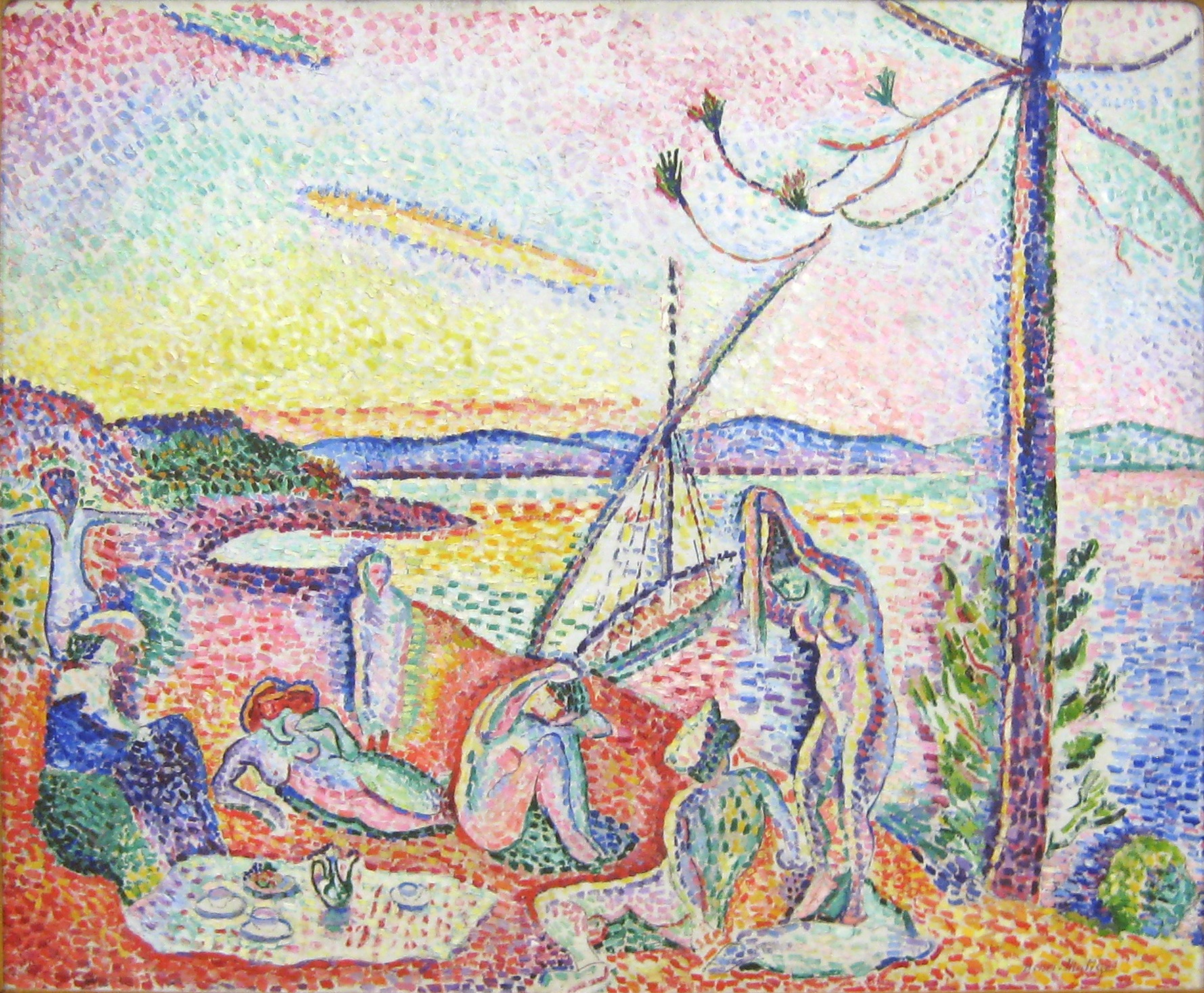 |
| Luxe, Calme et Volupté (1904) |
 |
| Girl Braiding Her Hair (1896) |
 |
| Bridge Over a Pond of Water Lillies (1899) |
Portland Place, as seen from the outside. It is the setting for the entire first act of the play.
http://englishbuildings.blogspot.com/2010/12/portland-place-london.html
Man and Superman - Micro History
Mahdist War (England vs. Sudanese rebels) 1891-1899
At the termination of the conflict, Sudan comes uinder the control of England.
http://en.wikipedia.org/wiki/Mahdist_War
The urban sprawl of London, as well as population, drastically increased through the 19th century.
http://www.oldbaileyonline.org/static/London-life19th.jsp
Arthur Balfour is succeeded as Prime Minister by Henry Campbell-Bannerman in 1905
http://www.number10.gov.uk/history-and-tour/prime-ministers-in-history/arthur-james-balfour
1899 - HMS Oceanic is launched, heralding a new age of trans-Atlantic transport (years before her famous sister sank)
http://www.greatships.net/oceanic2.html
Australia becomes a commonwealth realm of the UK in 1900, graduating from colony status.
http://foundingdocs.gov.au/item-did-11.html
Education in England was nearing the idea of what we have today: common education for everyone. Trade schools already existed, but public schools as we know them were not wuite on the scene yet.
http://www.educationengland.org.uk/history/chapter03.html
At the termination of the conflict, Sudan comes uinder the control of England.
http://en.wikipedia.org/wiki/Mahdist_War
The urban sprawl of London, as well as population, drastically increased through the 19th century.
http://www.oldbaileyonline.org/static/London-life19th.jsp
Arthur Balfour is succeeded as Prime Minister by Henry Campbell-Bannerman in 1905
http://www.number10.gov.uk/history-and-tour/prime-ministers-in-history/arthur-james-balfour
1899 - HMS Oceanic is launched, heralding a new age of trans-Atlantic transport (years before her famous sister sank)
http://www.greatships.net/oceanic2.html
Australia becomes a commonwealth realm of the UK in 1900, graduating from colony status.
http://foundingdocs.gov.au/item-did-11.html
Education in England was nearing the idea of what we have today: common education for everyone. Trade schools already existed, but public schools as we know them were not wuite on the scene yet.
http://www.educationengland.org.uk/history/chapter03.html
Monday, June 13, 2011
Man and Superman - Macro History
1898 - Spanish-American War
Although the UK was not directly involved in the (appropriately titled) Spanish-American War, it was nonetheless a powerful event on the world stage. During the months leading up to (and during) the war, England supported the United States (via moral sentiment, rather than anything tangible).
http://www.globalsecurity.org/military/ops/spanish_american.htm
1899 - Spanish rule ends in Cuba (War ended)
Given that there are two scenes in the Sierra Nevada, the State of Spain is important.
http://www.loc.gov/rr/hispanic/1898/chronspain.html
Einstein's "Special Theory of Relativity" is published in 1905. This marks the true beginning of this scientific giant's career.
http://en.wikipedia.org/wiki/Special_relativity
Ford Motors is founded. 1903
http://wardsautoworld.com/ar/auto_history_ford_motor/
Sigmund Freud publishes The Interpretation of Dreams 1900
http://www.iep.utm.edu/freud/
Aspirin first produced. 1899
http://en.wikipedia.org/wiki/Aspirin
Bloody Sunday occurs in St. Petersburg as 500 protesters against the Czar are massacred. 1905
http://www.ditext.com/voline/89.html
Russian revolution of 1905 occurs in October. Although it failed to overthrow the Czar, this was the first step to the Soviet Union.
http://www.ditext.com/voline/89.html
Although the UK was not directly involved in the (appropriately titled) Spanish-American War, it was nonetheless a powerful event on the world stage. During the months leading up to (and during) the war, England supported the United States (via moral sentiment, rather than anything tangible).
http://www.globalsecurity.org/military/ops/spanish_american.htm
1899 - Spanish rule ends in Cuba (War ended)
Given that there are two scenes in the Sierra Nevada, the State of Spain is important.
http://www.loc.gov/rr/hispanic/1898/chronspain.html
Einstein's "Special Theory of Relativity" is published in 1905. This marks the true beginning of this scientific giant's career.
http://en.wikipedia.org/wiki/Special_relativity
Ford Motors is founded. 1903
http://wardsautoworld.com/ar/auto_history_ford_motor/
Sigmund Freud publishes The Interpretation of Dreams 1900
http://www.iep.utm.edu/freud/
Aspirin first produced. 1899
http://en.wikipedia.org/wiki/Aspirin
Bloody Sunday occurs in St. Petersburg as 500 protesters against the Czar are massacred. 1905
http://www.ditext.com/voline/89.html
Russian revolution of 1905 occurs in October. Although it failed to overthrow the Czar, this was the first step to the Soviet Union.
http://www.ditext.com/voline/89.html
Thursday, June 9, 2011
Man and Superman - Casting Statement
First and foremost, it is important to remember that Shaw was very much a man of the written word (and of philosophy). Therefore, many of his characters are heavily imbued with a particular philosophical or social standpoint, distinct from others of their group. The dialogue will often descend into heavy socio-political debate, and the actors cast must be confident in that sort of dialogue.
Class is very evident within this piece, as it is for most British literature, it being an inescapable defining characteristic of the empire, rather similar to race within the United States. By and large, the characters within the play are upper-class, though they have no titles and therefore fall outside of the aristocracy (though they may very well be wealthier than many aristocrats). Notable exceptions to this rule are Henry and Mendoza (plus his band of brigands, naturally). This means that the vast majority of the characters have lead existences free of financial burden, but rather full on leisure time.
Class is very evident within this piece, as it is for most British literature, it being an inescapable defining characteristic of the empire, rather similar to race within the United States. By and large, the characters within the play are upper-class, though they have no titles and therefore fall outside of the aristocracy (though they may very well be wealthier than many aristocrats). Notable exceptions to this rule are Henry and Mendoza (plus his band of brigands, naturally). This means that the vast majority of the characters have lead existences free of financial burden, but rather full on leisure time.
Concerning race, I see no profound reason to exclude the option of colorblind casting for this play. I say this because the play is so far removed from the idea of race as to make it irrelevant. The setting is also far enough removed from our current reality that we are more willing to see changes made.
Concerning gender, I would certainly advise against cross-casting. In theory, one could cast some of the brigands as females, though that goes rather against the general air their dialogue cultivates. All that being said, I am a proponent of male roles going to actors, and female roles going to actresses, as there are roles for both sets in most plays.
On the topic of disabilities, they are allowable with certain exceptions. Henry Straker must be able-bodied, as he is working-class as well as a mechanic. Were he diminished physically, he would be less able to do his job, thus decreasing believability. Whoever is cast as Ann must be graceful (or at least capable of physical grace), as mentions are made of her lithe form. To remedy this, one could cut the lines that reference her as such. This is up to the director. Mendoza and the brigands must look physically capable, for their “trade” requires that they live and work in the mountains of the Sierra Nevada (which are not quite as forgiving to the disabled as society wishes to be). Also, the officer sent to capture them must look capable of doing so. Apart from these exceptions, I see no reason not to cast actors with disabilities, provided they can deliver their lines and perform the basic actions of the play. As mentioned before, the members of these upper-class families want for little, and their physical capability is of little consequence to their character.
Age-wise, there are opportunities for both men and women to be cast from their twenties on up to old age. If presented at a college level, and one lacks the necessary ages, playing age will suffice. The concept of age, however, is important to the story, as there is a well-defined struggle between the old and new within Tanner and Ramsden.
Tuesday, June 7, 2011
Man and Superman - Plot Summary
Act 1
The setting is a study in Portland Place, London. Onstage is Roebuck Ramsden, a rather elderly man of affluence and affairs. Octavius Robinson, a young poet, is announced by the maid. He appears dressed in an elegant suit of mourning. As Ramsden consoles him, the audience learns that Octavius' benefactor and friend, Mr. Whitefield, is dead. Ramsden is confident that he will be the one who will serve as guardian of Whitefield's daughters, Ann and Rhoda, and he expresses his hope that Ann and Octavius will marry. Octavius can think of nothing which would make him happier. As they discuss this matter, Ramsden warns the young poet against the latter's friend, John Tanner, author of the notorious Revolutionist's Handbook. Ramsden prides himself on being an advanced thinker and liberal but regards Tanner as an immoral person. If Ramsden indeed is to be the guardian of the lovely Ann, he will see to it that Tanner is kept away from her.
At this point, the object of Ramsden's disapproval appears. Jack Tanner, an attractive and obviously superior young man, is in a state of near-panic. As he excitedly informs Ramsden, both he and the latter have been appointed by Whitefield's will to act as Ann's guardians. Ironically, Tanner, to whom Ramsden is hopelessly old-fashioned, was responsible for his own appointment, one which he dreads. He had advised Mr. Whitefield to team Ramsden up with a younger man, not dreaming that he would be White-field's choice. He pleads with Ramsden to get him out of this predicament, arguing that Ann is anything but the weak, dutiful young woman. He sees her as willful and hypocritical and declares that she will "commit every crime a respectable woman can." Ramsden himself states emphatically that he will refuse to act as guardian with Tanner. But the younger man prophesies that neither one of them will escape the obligations which have been forced upon them. Octavius is as appalled at Tanner's unflattering description of Ann as an unscrupulous siren as Ramsden is at Tanner's political views. To him she is a goddess, nor can anything that Tanner says convince him that she is not divine. For the naive Octavius, she is the "reality of romance."
Now Ann makes her appearance. Shaw describes her as "perfectly ladylike, graceful, and comely, with ensnaring eyes and hair." What sets her apart from other beautiful women is her abundant vitality. With her is Mrs. Whitefield, her mother, a little woman certainly devoid of such vitality, one who wears an expression of "muddled shrewdness." Playing her role of the dutiful and helpless daughter, Ann listens to Ramsden, who tells her that Tanner and he have been named as joint guardians and trustees of the late Mr. Whitefield's two daughters. Tanner's prophesy is soon justified. Ann will not violate her father's will; both Ramsden, whom she calls "Granny," and Jack must serve.
Ramsden, who had left the stage while Octavius and Jack express their markedly contrasting views of Ann, returns with "terrible news." Octavius' sister Violet is about to become an unmarried mother. All but Tanner are greatly shocked. He declares that the girl should be congratulated on "the fulfillment of her highest purpose and greatest function — to increase, multiply, and replenish the earth." It is Ramsden especially who expresses the conventional attitude: Violet is the victim of "a rascal . . . a libertine, a villain worse than a murderer" who is in their very midst! When he expresses his suspicions of Tanner, whom he describes as "a man of notoriously loose principles," Tanner adroitly points out that suspicion clings to Ramsden as well.
For the first time alone together on the stage, Ann and Jack converse. The audience learns that the two had known each other since childhood and that Jack had once declared his love for her. She does admit that once, when he had pretended to be in love with another girl, she had violated Jack's confidence; she had told the girl that Jack had informed her of the attachment. Tanner states that, as a result of his experience, he has come to believe moral passion to be the only real passion; no romance for him now. The entire episode is replete with interesting Shavian ideas which will be discussed later. What especially is made clear is that Ann indeed is the active one in the love game. As Tanner says, "I never feel safe with you: there is a devilish charm — or no: a subtle interest."
Ramsden and Octavius come back with Miss Ramsden, a hard-headed spinster who is determined that Violet must leave the house at once since she apparently wished to meet her betrayer again. Violet herself enters. She is quite self-possessed and obviously impenitent. When Tanner eloquently voices his approval of her, she turns upon him and vehemently repudiates his compliments. In so doing, Violet is forced to reveal the fact that she has been secretly married and is not a fallen woman at all.
Act 2
The setting is the carriage drive in the park of the house near Richmond. Jack Tanner, dressed in the contemporary costume for motoring, is watching his chauffeur, Henry Straker, who is repairing the automobile. The conversation between the two reveals that Enry (as he is usually called) is one of the new type of servants, one who is quite aware of his superiority in the world of machines. Jack Tanner is undoubtedly right when he wryly observes that the master has become the slave to the car and the chauffeur. Tanner tells Enry that one Mr. Malone, an American gentleman, is driving Octavius down in a new American steam car. Enry expresses his disappointment that he could not have had a race with them but is consoled by the news that both cars will be used for transporting the entire group, which will include Octavius, Violet, Ann, Rhoda, and Jack himself. He is incredulous, however, when he is told that Ann will not ride in Jack's car.
Octavius returns and an amusing colloquy follows when Tanner explains Enry's status as the New Man, a member of the class-conscious engineers. Not disrespectful, the chauffeur is anything but differential. He is aware that he does know more about machines — and women — than does his master.
Left alone with Tanner, Octavius solicits his sympathy. He had proposed to and been rejected by Ann. Jack insists that he has not been rejected at all and that Ann merely is not through playing with him. She is the pursuer, he argues, and Octavius is her marked-out victim. But poor lovesick Octavius rejects this counsel as only another sample of Jack's "eternal shallow cynicism." When Tanner learns that Ann had reproached his friend for not getting his permission to approach her, he pronounces blessings on the two and wishes them happiness. But he adds that Ann is really as free to choose as is Octavius. There follows a disputation on the subject of love as viewed by Tanner and Octavius respectively. When Straker reappears, the conversation shifts to Enry's preoccupation with motor racing.
Octavius gives Jack a note from Rhoda Whitefield, who has written that her elder sister Ann had forbidden her to go on the motor trip with Tanner and even to be in his company at any time on the grounds that he is "not a fit person for a young girl." Octavius sides with Ann, arguing that Jack's views are certainly not proper for the development of a young girl's mind and character.
Ann appears with the news that poor Rhoda cannot join the motoring party because she has one of her headaches. Jack is vastly amused; he has trapped Ann in a lie from which he is sure she cannot extricate herself. But Ann succeeds in doing just that. After sending Octavius to look after his American friend, she explains that she had been only the dutiful daughter carrying out her mother's instructions — another lie, of course. This provides Tanner with the cue for delivering a tirade on the tyranny of mothers and to challenge Ann to show her independence by joining him on a continental motor trip. To his chagrin, she promptly agrees to do so. After all, she explains, no impropriety would be involved, for Jack is her guardian and stands in her father's place.
Mrs. Whitefield arrives, accompanied by Hector Malone, the young American, and followed by Ramsden and Octavius. It is Jack's hope that Mrs. Whitefield will absolutely forbid Ann to go to the Continent with him. He is told that she has not the slightest objection — why should she object? Indeed, Mrs. Whitefield says that she had intended to ask Jack to take Rhoda out for a ride occasionally. So he learns that Ann had lied again. "Abyss beneath abyss of perfidy!" he exclaims. Ann hastily introduces Hector to Jack in order to divert attention from this outburst. In conversation with Tanner and Octavius, Hector reveals his devotion to Violet and is warned that she is a married woman, the identity of her husband unknown. Hector, the soul of chivalry, says that he will respect the lady's wishes but cannot understand why a husband should forbid his wife to reveal his identity. All this leads to a discussion of womanhood and marriage, Tanner as usual voicing unorthodox opinions. Hector asks to have a few words in private with Violet.
Alone on stage, the two exchange kisses, and the audience then learns definitely that they are married. The motivation for their secrecy was the fact that Hector's millionaire father was set on having his son marry a member of the aristocracy, someone with "a handle to her name." Hector urges Violet to let him announce their marriage publicly even if his father disinherits him. But Violet will have none of such "nonsense." Hector must not be romantic about money, she states; she has no intention of facing a struggle and poverty. When Hector says that he can borrow money and then go to work, she is appalled: "Do you want to spoil our marriage?" The young American remains worried about having to live a lie, especially after Jack Tanner had argued that marriage had not ennobled Violet's unknown husband. To Violet, Jack is a hateful beast, but the tolerant Hector is sure that all he needs is the love of a good woman.
Tanner returns with Straker as Violet and her husband leave to inspect the steam car. Jack and Enry discuss the continental trip. In the course of their conversation, the perspicacious chauffeur tells his master that Octavius has no chance of marrying Ann and that it is Jack himself she is after. Tanner is horrified at the thought that he is "the bee, the spider, the marked-down victim" Ann is bent on capturing. Seeking escape, he calls upon Enry to set a new motoring record to get far across the Continent and out of Ann's reach.
Act 3
It is evening, and the setting is that of a natural amphitheater in the Spanish Sierras. A group of about a dozen men recline about a dying campfire, while another serves as lookout on the adjacent rise of ground. These are an international band of brigands dedicated to stopping motor cars and robbing the occupants in order "to secure a more equitable distribution of the wealth." Their leader, a man with a fine voice and ready wit, is Mendoza. His followers include a bullfighter ruined by drink, at least one Frenchman, cockney Englishmen, and Americans. All are in their early thirties, except for one who is dressed like a broken-down English gentleman and who is anywhere from ten to twenty years older than the others; he is described as the respectable member of the group.
While waiting for victims, the brigands resume their evening debates on Anarchists and Social-Democrats. Present are one Anarchist and three Social-Democrats, making possible a lively discussion. But the others describe themselves as gentlemen and Christians. Mendoza presides with wit and skill, controlling the various speakers when they become too intense and excited. The debate is interrupted by the sound of an approaching motor car. The brigands have made the necessary preparations: Nails have been strewn on the road to puncture tires; one brigand stands ready to use his rifle if the nails should fail. They do not. The car is forced to stop, and its occupants, Jack Tanner and his chauffeur, are brought in as prisoners.
Tanner accepts his capture good-naturedly. When Mendoza introduces himself as President of the League of the Sierra and states that he lives by robbing the rich, Jack identifies himself as a gentleman who lives by robbing the poor. Thus a common bond is established between the two. In view of the exchange between Enry Straker and the brigands, it is quite understandable that the chauffeur wonders whether he and his master are enjoying a trip in the mountains or attending a Socialist meeting.
Mendoza, the soul of dignity and courtesy, dismisses his followers and announces that in Spain one puts off business until the next day. All can now relax; there will be no talk of ransom. In response to Tanner's questions and to Enry's occasional remarks, the brigand leader first talks of Socialism and then tells his life story. He, the president, had once been a successful waiter and had been driven to become a brigand by disappointment in love. No, the lady was not an earl's daughter; she was far more attractive than the daughters of the English peerage. Moreover, if she had not been "a woman of the people," he would have scorned her. Alas, she had rejected him because he was a Jew. She had been employed by a Jewish family and had become convinced that Jews considered Gentiles, especially English Gentiles, to be dirty in their habits. When Straker recalls that his sister had once been a cook in a Jewish family, the dramatic coincidence, as Tanner calls it, is revealed. Mendoza's beloved is Louisa, sister of Straker. Mendoza had heard a great deal about Enry, who was Louisa's favorite brother. But Straker is anything but pleased to hear a brigand tell of his love for the girl. At one point, Tanner has to intervene to prevent an attempt at physical violence. Things quiet down and Enry joins the other brigands in sleep. Mendoza and Jack continue their discussion, the brigand revealing his propensity for poetry and for paraphrasing Shakespeare. Tanner solemnly advises him to give up his romantic pose and to renounce Louisa, stating that he is "sacrificing his career to a monomania." But Mendoza will not follow this counsel, for the mountains make one dream of beautiful women; indeed "this is a strange country for dreams."
When Tanner lies down and composes himself for sleep, the brigand reads him an original love lyric addressed to Louisa Straker, but Jack is asleep before he has finished.
It is now the morning after. The brigands are aroused by their sentry's announcement of an approaching automobile accompanied by two armored cars filled with soldiers. Ann, Violet, Hector Malone, Ramsden, and (a bit later) Octavius enter. Ann makes straight for Jack Tanner. Hector tells Jack that she had tracked him at every stopping place — "She is a regular Sherlock Holmes." "The Life Force! I am lost," exclaims the newly found Tanner. Thanks to him, Mendoza and his followers escape arrest. Jack identifies them as his escorts, not his captors. In their respective ways, the brigands manifest their gratitude — all but the Anarchist, who defies the State with folded arms.
Act 4
The setting now is the garden in an expensive and pretentious villa in Granada. Enry Straker enters with an elderly Irishman. The chauffeur had been asked to deliver a note to Hector at the latter's hotel. He was and still is confused by the fact that this stranger had been identified as Hector Malone but had complied with the request to bring him along to the villa when told that "it's all right." Now he learns that the Irishman does not even know Violet Robinson's name. Violet enters, and the Irishman identifies himself as Hector Malone, Sr. (hereafter referred to as Malone to distinguish him from his son, Hector, Jr.). Throughout this first part of the scene, there is an amusing exchange between Enry and Malone on the subject of their respective dialects. Violet apologizes for any rudeness of which the confident Straker may have been guilty: "But what can we do? He is our chauffeur." A man of his mechanical skill is indispensable; all are dependent upon him.
The note had made Malone aware of his son's deep interest in some woman unknown to him; now he is told that Hector wants to marry Violet. He tells her that his son "will not have a rap" from him if his son does so because he has other plans. Malone concedes that Violet is an amiable and excellent young lady but, like his son, too romantic to be concerned with money. And he is staggered when Violet calmly states that she is not that foolish and that Hector must have money. Then he must work for it, Malone retorts. Work! There is no use having money if you have to work — it's nonsense, Violet replies coolly. But she almost loses her control when Malone advises her not to marry on the strength of such a belief. Is not her social position as good as Hector's, she next asks? The father states that his son's social position is exactly what he chooses to buy for him, and he makes it clear that he is dead-set on having Hector marry the daughter of an aristocrat. He concedes that he would not object if his son had chosen to marry a barefooted Irish girl as his own grandmother had been. Under such circumstances, Malone would not have denied the young man financial help since the expenditure involved "social profit." But if Hector married Violet, things would be "just like they are"; that is, he would remain middle class.
When Violet observes that many of her relatives would object to her marrying the grandson of a peasant and adds that there is obviously prejudice on both sides, Malone cannot help respecting her as "a pretty straightforward downright sort of young woman." Yet he remains firm: "I want no middle class properties and no middle class woman for Hector." The subsequent discussion about what the father should do for the son and what Violet could for him is interrupted by Hector's arrival, much to Violet's annoyance since she wanted more time to win over Malone to her point of view. Hector, playing the role of the complete man of honor, is indignant with his father for having opened the letter: "That's disawnerable." But Violet, dreading a scene, urges him to be reasonable, for Malone's name was on the envelope.
As father and son mutely glare at each other, Tanner, Ramsden, Octavius, and Ann come in. Ramsden is solicitous about Violet and Tanner about Hector since both had claimed to be indisposed and thus unable to join the others on a visit to the Alhambra. When Violet asks her husband to introduce his father to the new arrivals, Hector bluntly refuses: "He is no father of mine." She implores the two not to make a scene as the astonished Ann and Octavius withdraw. Violet can only look on "in helpless annoyance as her husband soars to higher and higher moral eminences without the least regard to the old man's millions." Tanner complicates the matter by letting the cat out of the bag. Malone learns that Violet is already married and assumes that his son has been pursuing a married woman. "You've picked up the habit of the British aristocracy, have you?" he almost shouts into his son's ear. So Hector has no alternative but to avow his marriage to Violet. "She's married a beggar," says the crushed Malone. But the son rejects the appellation; he is now a Working Man, having just started to earn his living that very afternoon. He is done with remittances from a man who insults his wife. The romantic Octavius is moved almost to tears by the apparent nobility of Hector's declaration of independence and begs to be allowed to shake his hand. Violet also is on the verge of tears, but not for the same reason. "Oh, don't be an idiot, Tavey," she exclaims in vexation.
When both Tanner and Octavius generously offer to help Hector get a good start, Malone changes his tune, now jealous that anyone but him should assist his son. He urges Hector not to be rash and makes abject apologies to Violet, describing her as just the wife his son wants. So all seems well that has ended well for the newlyweds. But Hector, still presenting himself as the man of high principles, is determined to be independent of his father, who urges Violet to bring the young man to his senses. At this point, he readily accepts her advice to do nothing without consulting her and eagerly gives her a thousand-dollar bill, Hector's "bachelor allowance." As Tanner observes the subservience of this multimillionaire, "one of the master spirits of the age," he wonders whether he will ever be reduced to such a state by a woman. Ramsden states that the sooner he is, the better for him.
After Violet leaves, Malone is elated. "That'll be a grand woman for Hector. I wouldn't exchange her for ten duchesses," he exclaims. In the conversation between Malone, Tanner, and Ramsden, it is revealed that the millionaire's investment in Mendoza, Limited, about which he knows nothing, had brought him to Granada. Jack informs him that Mendoza is a man who is thoroughly commercial and promises to take Malone to him. The Irishman and Ramsden depart. Tanner calls to Octavius, who is walking in the garden with Ann, and tells him that his sister's father-in-law is "a financier of brigands." He hurries after Malone and Ramsden.
Octavius now tries once more to win the hand of the girl he worships. But Ann tells him that she has no voice in the matter because her mother is determined that she will marry Jack. For a moment, Tavy believes that his friend has been false to him in urging him not to marry Ann, but she insists that such is not the case, adding that Jack does not really know his own mind. She then tells Tavy that not only is her mother dead set on her marrying Jack, but the will clearly indicates that her father wished her to do so. Octavius sees all this as proof that Ann is the dutiful, self-sacrificing daughter who will marry a man she does not love. Ann feels a faint impulse of pity for this young romantic, and she does her best to let him down gently. Thus she points out that he would always worship the ground she walked on and she could never live up to his idea of divinity. He would not become disillusioned if she married Jack; so he must remain a sentimental bachelor with his romantic dreams for her sake. Tavy vows that he will kill himself, but Ann tells him that such an act would be unkind. She concedes that Jack has no illusions about her but is sure that, sometimes at least, she will enchant him. No, Tavy must not tell Jack that she wants to marry him; he would run away again. Tavy is shocked. Would Ann marry an unwilling man, he asks incredulously? He is told that there is no such thing as an unwilling man when the woman really goes after him: "The only really simple thing is to go straight for what you want and grab it." Her advice to Tavy is to keep away from women and to be content to dream about them. Still with the best intentions, Ann continues to school Tavy in the subject of women. Violet, she says, is "hard as nails," but she has great respect for the woman who is practical and who gets her own way and does so without making people sentimental about her. Tavy passionately insists that he could never marry a designing woman — not after knowing and loving Ann. Poetic to the last, he admits defeat if not comprehension. Ann pats his cheek as she says goodbye and runs into the villa.
Mrs. Whitefield enters and runs to the weeping Tavy. She learns that, following her mother's wishes, Ann intends to marry Jack. Mrs. Whitefield endeavors to enlighten him, but he cannot believe that Ann would be guilty of deceit. Tanner enters, announces that he had left the two brigands, Mendoza and Malone, together, and then asks Tavy what is the matter. Tavy sadly asks Mrs. Whitefield to tell Jack what she wishes and then leaves. Jack is puzzled, and the mother comments on how all life seems to have become so complicated: "Nothing has been right since that speech Professor Tyndale made at Belfast." (The reference is to Tyndale's famous address before the British Association for the Advancement in Science which was delivered in the early 1870s and in which the physicist declared that there was no reason to believe that mind was separate from matter.) Jack agrees that life has indeed become involved and asks what he can do for her. She states that, whatever her wishes may be, Jack will certainly marry Ann, but he is not to blame the mother. Tanner emphatically replies that he has no intention of marrying Ann. Mrs. Whitefield expresses her hope that the two will marry, for she would like to see her daughter meet her match. Jack knows Ann for what she is, and Jack demonstrates his knowledge by describing Ann as an unscrupulous liar, a coquette, one who bullies women, and a hypocrite. He could stand everything except her "confounded hypocrisy." Mrs. Whitefield readily agrees with him and explains that, fond as she is of Tavy, she does not wish to see him suffer, whereas Jack would take care of himself very well. She adds that he must not think that she does not love Ann, her own flesh and blood, merely because she sees her daughter's faults.
Both Ann and Violet enter, the former saying that she had heard the entire conversation. Violet has come to say her farewells. She tells Jack that the sooner he gets married too, the better. Aware that the trap is closing in on him, he restively remarks that he will probably end up a married man before the day is over. Mrs. Whitefield, in tears at the thought of Violet's departure, accompanies the bride offstage.
Ann is now alone with Tanner once more. Jack bewails the fact that everyone, even Ramsden, now treats him as if his marriage to Ann were a settled matter. Ann placidly remarks that she had not proposed to him and that he need not be married if he did not want to be. But Jack sees himself as a condemned man who has no control over his fate. He explosively denounces marriage as an "apostasy, profanation of my soul, shameful surrender, ignominious capitulation, acceptance of defeat." The sparring match between the two continues in lively fashion as Ann woos the reluctant Tanner, now without dissimulation. From their childhood, she argues, the Life Force had prepared a trap for them. Still Jack protests that he will not marry her. "Oh, you will, you will," she replies. At last he seizes her in his arms, declaring that he does love her and the Life Force enchants him. When he makes one last effort to escape her embrace, she swoons.
Most of the other characters return to the stage — Violet, Octavius, Mrs. Whitefield, Malone, Ramsden, Mendoza, and Straker. All are concerned for the well-being of Ann, who revives sufficiently to announce that Jack has promised to marry her. When Tavy bravely congratulates his friend, Jack tells him that he had not proposed but had been trapped. Ann is relieved when Violet tells her that Jack had said nothing. She appears to faint again but recovers to say that she is now quite happy. Malone is quite impressed with Jack, whom he sees as "a rough wooer," the best sort. All congratulate Jack on his happiness. But in his last speech of any length, he describes his status. He is not a happy man. Both he and Ann have knowingly renounced happiness, freedom, tranquility, and especially "the romantic possibilities of an unknown future." The wedding will be the simplest possible. It will take place three days after their return to England, and it will be in the office of the district superintendent registrar. Violet calls Jack a brute, but Ann looks at him with fond pride and caresses his arm. "Go on talking," she says. "Talking!" exclaims Jack, and universal laughter bursts forth as the play ends.
Man and Superman - Fable
Man and Superman – Fable
The play opens with Ramsden, an elderly gentleman in his study. He is shortly joined by Octavius, the adopted son of Mr. Whitefield (who has just recently died). They discuss Mr. Whitefield’s death and how much his care meant to Octavius and his sister Violet, who was adopted along with him when their own father died. Discussion turns to a bound book on Ramsden’s table, whereupon it is revealed to be The Revolutionist’s Handbook, a social text written by a dear friend of Octavius’ (Tanner) whom Ramsden despises for personal and social reasons. Despite this dislike, Tanner was well-liked by Mr. Whitefield and his family, and thus has arrived for this mourning (as well as the will-reading). Upon his arrival, verbal barbs are traded between he and Ramsden, though nothing too vile at this juncture. Ramsden leaves to attend to the women of the house, while Conversation between the two friends turns to Ann Whitefiled, biological daughter of the late Mr. Whitefield. Octavius is quite smitten with her and wishes to marry her, but knows he must wait until her mourning has passed. Tanner rails against social custom and marriage in particular, stating that Octavius (as an artist) is an awful candidate for such a union, believing that an artist has a purpose higher than that of being destroyed by a woman, whose only purpose is marked within the drive to create, be it new life or new union. Their argument is cut short when Ramsden returns in shock, having learned that Mr. Whitefield has decreed in his will that guardianship of his daughter Ann shall be split between himself and Tanner. They both object to this; Ramsden because of his distaste for Tanner, and Tanner for his desire to remain free of entanglements. Ann arrives, and after teasing Octavius a bit, enforces that her father’s will must absolutely be followed, and plays the two men against each other until they consent to the guardianship. Mrs. Whitefield tells that Violet has been seen going to a certain doctor (implied to be a “family” doctor), and everyone is outraged. Violet refuses to tell who the man who impregnated her is, to the further rage of all but Tanner, who congratulates her unconventionality. This insults her, prompting her to reveal that she had her marriage in secret, but still refuses to tell his name. Tanner is embarrassed.
Some time later, we meet Hector, a wealthy American visiting the countryside as a friend of Octavius. We learn, as the audience, that Hector is Violet’s secret husband, but has remained secret for the moment until he can convince his wealthy father to allow the union. Tanner, after railing further against marriage learns that Ann intends to marry him, rather than Octavius. He promptly flees to Spain, out of guilt and fear of Ann.
The whole group follows him, led by Ann (falsely) to believe it is a planned outing for all to enjoy. Hector’s father (Malone) shows up, having learned that Violet is in love with his son (not knowing they are wed). He and Violet argue over her merit, but he refuses, on the grounds that Hector must marry one of a different class (either higher or lower). He does this that one of the members benefit socially from the union. Hector shows up and reveals the secret that he is Violet’s husband. All but Malone are relieved. Ann reveals that she never loved Octavius, and was merely toying with him, despite pretending otherwise, stating that an artist should live with a broken heart, and that is how she intends him to live. She finally corners Tanner and convinces him to marry her, though he resists quite a bit, and makes a talky fuss to the amusement of the rest of the group, save for Octavius, who is (rather understandably) slightly less enthused and rather more brokenhearted.
Friday, June 3, 2011
Man and Superman - Characters
Characters (in order of appearance):
Roebuck Ramsden - An old man, though not feeble (robust, even). One of the newly-appointed co-wards for the recently orphaned Ann, he detests Tanner's social ideas and personal bearing. He strongly objects to Tanner being placed in a position of moral authority over the girl.
A Maid - A maid within the Ramsden household.
Octavius "Tavy" Robinson - A young gentleman. He is an artist, idealistic, and head-over-heels in love with Ann.
John "Jack" Tanner - An attractive young man, also of gentlemanly class. He is a dear friend of Octavius', and is very forward-thinking, often to the point of impertinence. Values his independence and his ideals, sometimes (it would seem) merely to spite the old-fashioned.
Ann Whitefield - A young woman of class, recently orphaned. A coquette and a hypocrite. Wishes to marry Tanner, rather than Octavius, whom she has strung along. It can be difficult to find the likeable side to this character. This character is vitality personified.
Mrs. Whitefield - Ann's aging mother. She is not much like her daughter at all, being rather wilted and devoid of the striking vitality of her daughter.
Miss. Ramsden - Roebuck's spinster sister. An all-around prude.
Violet Robinson - Octavius' sister. She iss been secretly married to Hector Malone Jr. before the opening of the show and is now pregnant. Insists that the union be kept a secret until his father can be persuaded to support them in the future.
Henry "Enry" Straker - Tanner's chauffeur, engineer and friend. Decidedly cockney, and proud of his class (as well as the dependance of the upper-class upon him).
Hector Malone Jr. (textually: Hector) - A well-bred American. He is young, and a bit naive about money (unlike his father), never having worked for it before. He is Violet's secret husband.
Mendoza - The leader of a band of brigands operating within the Sierra Nevada. A Jewish Spaniard, he is a romantic at heart and pines for his lost love. He also writes terrible poetry.
The Anarchist - An older brigand, in his upper 40's-50's. Does his best to look overly respectable, despite his station. Is quite polite (to all but entities of the state, such as the military opfficer)
The Frenchman - He is one of the three social-democrats of the brigands. He speaks very little English. Is rather passionate.
The Sulky Social-Democrat - Englishman. Obstinate and combative.
The Rowdy Social Democrat - Cockney Englishman. Rowdy and mischeivous.
Officer - Military officer in charge of capturing Mendoza's brigands.
(Side Note: It is preferrable to have 5-6 extra men on hand to be either soldiers or spare brigands during the Sierra Nevada sequence, though not strictly neccessary, as they do not speak)
Hector Malone Sr. (textually: Malone) - Hector Jr.'s Irish billionaire father. Opposes his son's marriage to Violet because she is of equal class to them. He maintains that his son must marry either up or down, so that someone may be elevated by the union.
Roebuck Ramsden - An old man, though not feeble (robust, even). One of the newly-appointed co-wards for the recently orphaned Ann, he detests Tanner's social ideas and personal bearing. He strongly objects to Tanner being placed in a position of moral authority over the girl.
A Maid - A maid within the Ramsden household.
Octavius "Tavy" Robinson - A young gentleman. He is an artist, idealistic, and head-over-heels in love with Ann.
John "Jack" Tanner - An attractive young man, also of gentlemanly class. He is a dear friend of Octavius', and is very forward-thinking, often to the point of impertinence. Values his independence and his ideals, sometimes (it would seem) merely to spite the old-fashioned.
Ann Whitefield - A young woman of class, recently orphaned. A coquette and a hypocrite. Wishes to marry Tanner, rather than Octavius, whom she has strung along. It can be difficult to find the likeable side to this character. This character is vitality personified.
Mrs. Whitefield - Ann's aging mother. She is not much like her daughter at all, being rather wilted and devoid of the striking vitality of her daughter.
Miss. Ramsden - Roebuck's spinster sister. An all-around prude.
Violet Robinson - Octavius' sister. She iss been secretly married to Hector Malone Jr. before the opening of the show and is now pregnant. Insists that the union be kept a secret until his father can be persuaded to support them in the future.
Henry "Enry" Straker - Tanner's chauffeur, engineer and friend. Decidedly cockney, and proud of his class (as well as the dependance of the upper-class upon him).
Hector Malone Jr. (textually: Hector) - A well-bred American. He is young, and a bit naive about money (unlike his father), never having worked for it before. He is Violet's secret husband.
Mendoza - The leader of a band of brigands operating within the Sierra Nevada. A Jewish Spaniard, he is a romantic at heart and pines for his lost love. He also writes terrible poetry.
The Anarchist - An older brigand, in his upper 40's-50's. Does his best to look overly respectable, despite his station. Is quite polite (to all but entities of the state, such as the military opfficer)
The Frenchman - He is one of the three social-democrats of the brigands. He speaks very little English. Is rather passionate.
The Sulky Social-Democrat - Englishman. Obstinate and combative.
The Rowdy Social Democrat - Cockney Englishman. Rowdy and mischeivous.
Officer - Military officer in charge of capturing Mendoza's brigands.
(Side Note: It is preferrable to have 5-6 extra men on hand to be either soldiers or spare brigands during the Sierra Nevada sequence, though not strictly neccessary, as they do not speak)
Hector Malone Sr. (textually: Malone) - Hector Jr.'s Irish billionaire father. Opposes his son's marriage to Violet because she is of equal class to them. He maintains that his son must marry either up or down, so that someone may be elevated by the union.
Man and Superman - Exegesis
Portland Place (Pg. 3)
a large house on a wide street in well-to-do London. Ramsden's house.
http://en.wikipedia.org/wiki/Portland_Place
shew (Pg. 4)
old-fashioned variant of show.
http://www.wordreference.com/definition/shew
jeune premier (Pg. 4)
perfidy (Pg. 63)
uxoriousness (Pg. 67)
adj. - Excessively submissive or devoted to one's wife.
Beaumarchais (Pg. 69)
social-democracy (Pg. 74)
A socio-political movement posited as a reform of capitalism in the manner of socialism, thought not as far under the auspices of government as to support true communism. Worker's rights are heavily promoted.
http://en.wikipedia.org/wiki/Social_democracy
funk (Pg. 83)
A state of cowardly fright, or panic.
http://www.thefreedictionary.com/Funk
"Nothing has been right since that speech that professor Tyndall made at Belfast." (Pg. 161)
John Tyndall was a prominent 19th-century physicist at the Royal Institution in England. The speech referred to was made in 1874 in Belfast, wherein he stated the belief that mind and matter could no longer be thought of a truly seperate.
"It was a time when thought had become abject, and when the acceptance of mere authority led, as it always does in science, to intellectual death. Natural events, instead of being traced to physical, were referred to moral causes; while an exercise of the phantasy, almost as degrading as the spiritualism of the present day, took the place of scientific speculation." - John Tyndall, Belfast address, 1874
Qeurelous (Pg. 163)
a large house on a wide street in well-to-do London. Ramsden's house.
http://en.wikipedia.org/wiki/Portland_Place
shew (Pg. 4)
old-fashioned variant of show.
http://www.wordreference.com/definition/shew
jeune premier (Pg. 4)
1. the male juvenile lead in a play or movie.
perfidy (Pg. 63)
2: an act or an instance of disloyalty
uxoriousness (Pg. 67)
adj. - Excessively submissive or devoted to one's wife.
Beaumarchais (Pg. 69)
French intellectual (1732-1799). Most notable as a playwright (of Figaro fame)
social-democracy (Pg. 74)
A socio-political movement posited as a reform of capitalism in the manner of socialism, thought not as far under the auspices of government as to support true communism. Worker's rights are heavily promoted.
http://en.wikipedia.org/wiki/Social_democracy
funk (Pg. 83)
A state of cowardly fright, or panic.
http://www.thefreedictionary.com/Funk
"Nothing has been right since that speech that professor Tyndall made at Belfast." (Pg. 161)
John Tyndall was a prominent 19th-century physicist at the Royal Institution in England. The speech referred to was made in 1874 in Belfast, wherein he stated the belief that mind and matter could no longer be thought of a truly seperate.
"It was a time when thought had become abject, and when the acceptance of mere authority led, as it always does in science, to intellectual death. Natural events, instead of being traced to physical, were referred to moral causes; while an exercise of the phantasy, almost as degrading as the spiritualism of the present day, took the place of scientific speculation." - John Tyndall, Belfast address, 1874
Qeurelous (Pg. 163)
1: habitually complaining
— quer·u·lous·ly adverb
— quer·u·lous·ness noun
Subscribe to:
Comments (Atom)